ChatGPT Launches a Spotify Wrapped-Style Year-End Recap
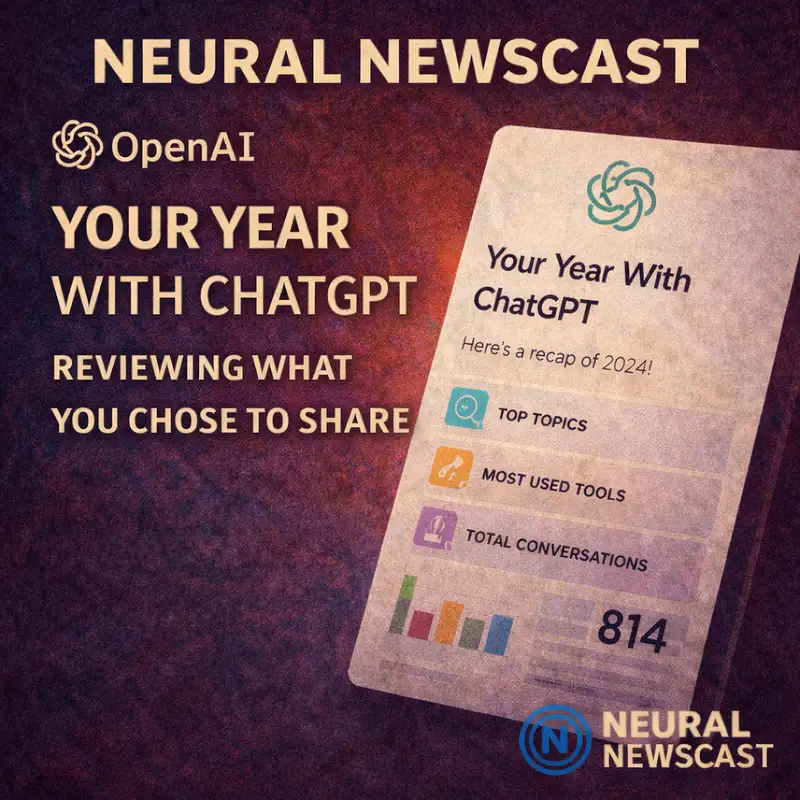
From Neural Newscast, I'm Thomas Keene. Today, we're looking at a new open AI feature called Your Year with ChatGPT. It's basically a year-end recap that, yeah, really does look a lot like Spotify Rapped, except it's for your conversations with an AI assistant. I'm Adriana Costa. And these recap features are meant to feel playful and personal, right? But they also point to something more serious. Your everyday questions, habits, and worries turn into a data trail. And then technology can summarize it back to you like it's a little story of your year. CNET Reports, the recap highlights trends in how you used ChatGPT over the year. So think of it as a snapshot, what you asked for help with, how you worked with the tool, all packaged in a quick, easy-to-skim format. And the format really... really matters. When a product turns your behavior into this tidy narrative, it kind of nudges sharing and comparison. It's not only here's what you did, it's more like here's who you are, according to your prompts. This fits a bigger shift in consumer tech, which is personalization as a headline feature. If an app can give you a recap, it can use the same patterns to recommend tools, suggest workflows, and keep you coming back. And for OpenAI, that's a pretty straightforward product win because it makes ChatGPT feel more tailored and, you know, stickier. But personalization has this mirror image, which is privacy. A year-end recap is basically a reminder your interactions can be categorized. What you're learning, what you're planning, what you're struggling with, what you're curious about. At midnight, when you really don't want to text a friend. Helpful, grounded, gentle caution on don't assume it's harmless. So, okay, the practical question is, what should users do with this? First, treat a recap like you treat any summary of personal data. Look at it, enjoy it if it's useful, but don't assume it's harmless just because it's presented in this fun, celebratory way. Second, be really intentional about what you share publicly. People post raps all the time, sure, but a chat GPT recap could hint at things you did not mean to broadcast. Health concerns. Immigration paperwork. Family conflict. Money stress. Career uncertainty. even if there aren't specifics, the patterns can still be revealing. And third, it's a good moment to check your settings. See whether your chats are saved, whether you've enabled features that use your history to personalize responses, and what options you have for deleting past conversations. Honestly, even basic maintenance can cut down on how much sensitive material sits around long-term. There's also... A cultural angle here. AI assistants are becoming a kind of private diary for millions of people. But unlike a diary, it's connected to a product ecosystem. A recap can feel like a celebration of your year, but it also normalizes this idea that your inner life is legible to a platform. CNET frames it as a wrapped style feature, and that comparison is fair. It's a familiar UX pattern. Summarize, personalize, invite sharing, reinforce the habit. For users, the upside is convenience and a bit of reflection. The trade-off is your usage gets translated into insights, whether you share them or not. If you do decide to check it out, treat it as a prompt to think about your own boundaries. What kinds of questions are you comfortable putting into an AI tool? Which topics belong with a professional, a friend, or a more private space? That's not fear. That's digital literacy. That's the update from Neural Newscast. I'm Thomas Keene. And I'm Adriana Costa. Thanks for listening. If you want more stories like this, follow the show and share it with someone who'd actually use a chat GPT recap. Neural Newscast is AI-assisted, human-reviewed. View our AI transparency policy at neuralnewscast.com.
Creators and Guests