A Seismic Start to 2026: The Fall of Maduro and the Shift in Tech
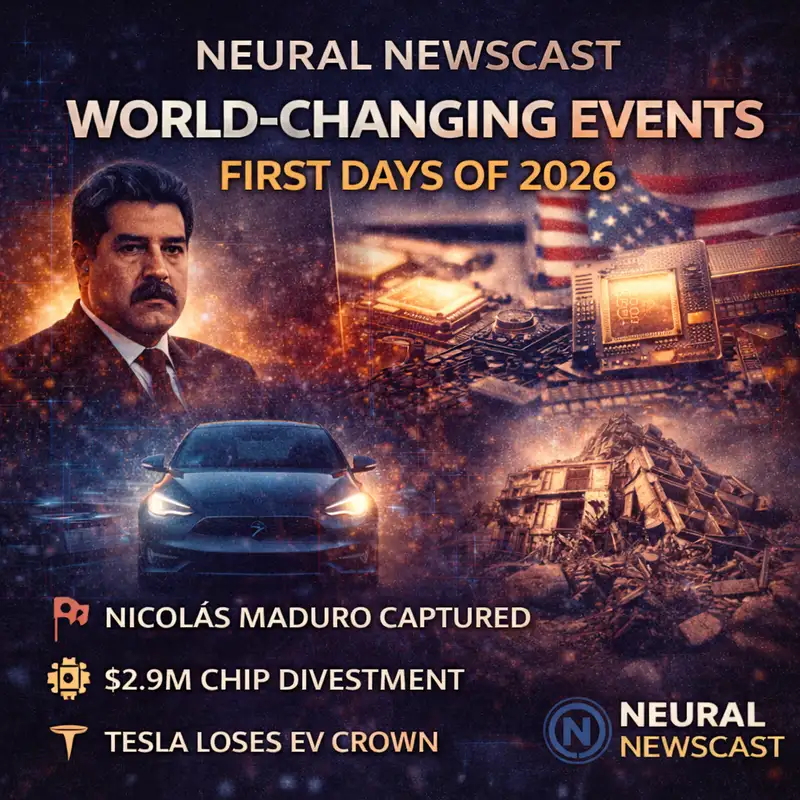
Good evening. It is Saturday, January 3rd, 2026, and the world feels fundamentally different than it did just 48 hours ago. I am Miles Mercer. We begin tonight with a story that, well, it is likely to define the decade. In a stunning military operation, the United States has conducted strikes in Venezuela, resulting in the capture of Nicolas Maduro. He has reportedly been flown out of the country already. It is an unprecedented escalation, Miles. I am Noah Feldman. While the military details are still emerging, I mean, the geopolitical and economic ripples are already being felt. This move comes as the administration also exchanges some pretty sharp threats with Iranian officials over the ongoing protests there. It suggests a much more aggressive stance on global intervention as we enter this new year. Yeah, and that aggression is appearing on the domestic front as well, though, you know, in a more regulatory sense. We are seeing a significant move regarding American technology and supply chains. Right. President Trump has ordered a divestment in a $2.9 million semiconductor chips, citing the need to protect U.S. security interests. This aligns with the broader push toward tech sovereignty. Meanwhile, the digital economy is, well, a changing of the guard. Tesla has officially lost its title as the world's largest electric vehicle maker after a second consecutive year of falling sales. It marks a cooling period for a brand that, honestly, once seemed untouchable. Hmm. It is a reminder of how quickly the tide can turn, both in industry and in nature. As these political shifts occur, southern and central Mexico are reeling from a 6.5 magnitude earthquake. It has claimed at least two lives. And, I mean, it serves as a jarring reminder of our vulnerability amidst these human-made conflicts. Totally. On the labor and infrastructure side, we are also watching California closely. Big tech successfully blocked data center legislation that would have imposed stricter requirements, leaving only a study requirement in its place. It is a win for the industry, sure, but a point of contention for those worried about the massive energy demands of our growing AI infrastructure. From the capture of a head of state to the quiet death of a legislative bill, the pace of change is just accelerating. As we look at the wreckage in Mexico and the new political reality in South America, one wonders what the rest of 2026 has in store for us. Thank you for joining us for this late-night summary. For Neural Newscast, I am Miles Mercer. And I am Noah Feldman. We will continue to track these developments as the world reacts. Good night. Neural Newscast is AI-assisted, human-reviewed. View our AI transparency policy at neuralnewscast.com.
Creators and Guests